
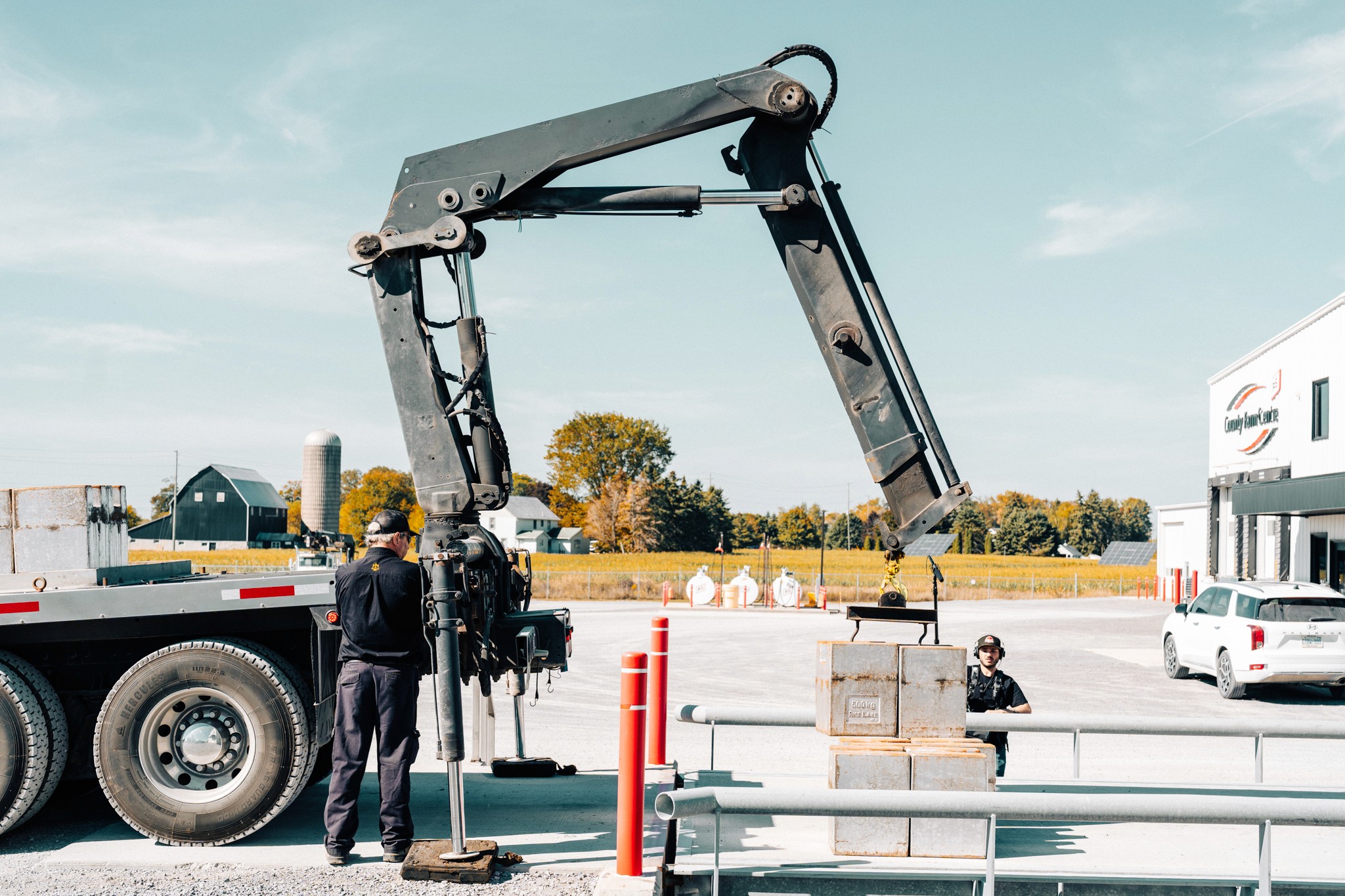
Construction season places intense demand on truck scales. Increased traffic, heavier loads, and tighter timelines amplify wear and risk. This article explains how peak cycles affect scale performance and why pre-season inspections prevent costly mid-season failures.
In regions with defined construction seasons, activity does not remain steady year-round.
When spring arrives and projects accelerate, aggregate pits, concrete plants, and material yards experience a rapid increase in truck traffic. Volume rises sharply. Equipment operates longer hours. Production pressure intensifies.
Truck scales sit at the center of this surge.
What performs adequately during slower months may struggle under peak demand.
Increased Traffic and Repetitive Loading
During peak construction season, truck scales may handle:
Higher daily truck counts
Shorter turnaround times
Heavier average loads
Continuous operation with minimal downtime
Repeated loading increases stress on:
Load cells
Structural components
Welds and mounting hardware
Foundations
Even if each load is within rated capacity, cumulative stress accelerates wear.
Higher Risk of Overloading
Busy yards often experience pressure to move material quickly.
Under tight deadlines, overloading can occur. Even small exceedances, repeated over time, strain load cells and structural elements.
Overloading contributes to:
Premature load cell fatigue
Structural distortion
Calibration drift
Increased likelihood of mid-season breakdown
Peak volume magnifies the consequences of misuse.
Environmental Transition Effects
Construction season often begins during spring thaw.
Freeze-thaw cycles may have already:
Shifted foundations
Compromised drainage
Introduced moisture into pits
Accelerated corrosion
As truck volume increases, underlying winter damage may surface.
Without early inspection, these hidden issues can cause unexpected performance problems.
The Cost of Mid-Season Failure
When a truck scale fails during peak season, the impact is immediate.
Possible consequences include:
Long truck lineups
Delayed deliveries
Lost production time
Customer dissatisfaction
Emergency repair premiums
Downtime during peak months carries greater financial exposure than downtime during slower periods.
Preventative planning reduces that risk.
Why Pre-Season Inspections Matter
A pre-season inspection identifies vulnerabilities before demand increases.
Key inspection points include:
Load cell performance and corner balance
Structural integrity and weld condition
Foundation alignment
Drainage effectiveness
Electrical stability and grounding
Addressing minor issues before volume spikes prevents small weaknesses from becoming major failures.
Pre-season calibration also ensures measurement accuracy before high throughput begins.
Reviewing Spare Parts and Redundancy
Peak season is not the time to discover that critical components are unavailable.
Pre-season planning should include:
Confirming availability of essential spare parts
Reviewing service history
Evaluating high-wear components
Scheduling preventative replacements if needed
Preparation reduces response time if an issue arises.
Supporting Operational Confidence
Construction season is often the most profitable period of the year for aggregate and material operations.
Stable scale performance supports:
Accurate billing
Efficient traffic flow
Reliable reporting
Strong customer relationships
Preventative inspection strengthens confidence when volume and expectations are highest.
Final Thoughts
Seasonal construction cycles place unique pressure on truck scales.
Higher traffic, heavier loads, and environmental transition increase mechanical stress and operational risk.
Pre-season inspections and preventative service reduce the likelihood of mid-season breakdowns, protecting both uptime and revenue.
When peak demand arrives, preparation makes the difference between disruption and stability.

Need New Equipment?
From a single bench scale to a full truck scale installation, we’ll help you get the right system in place from the start.
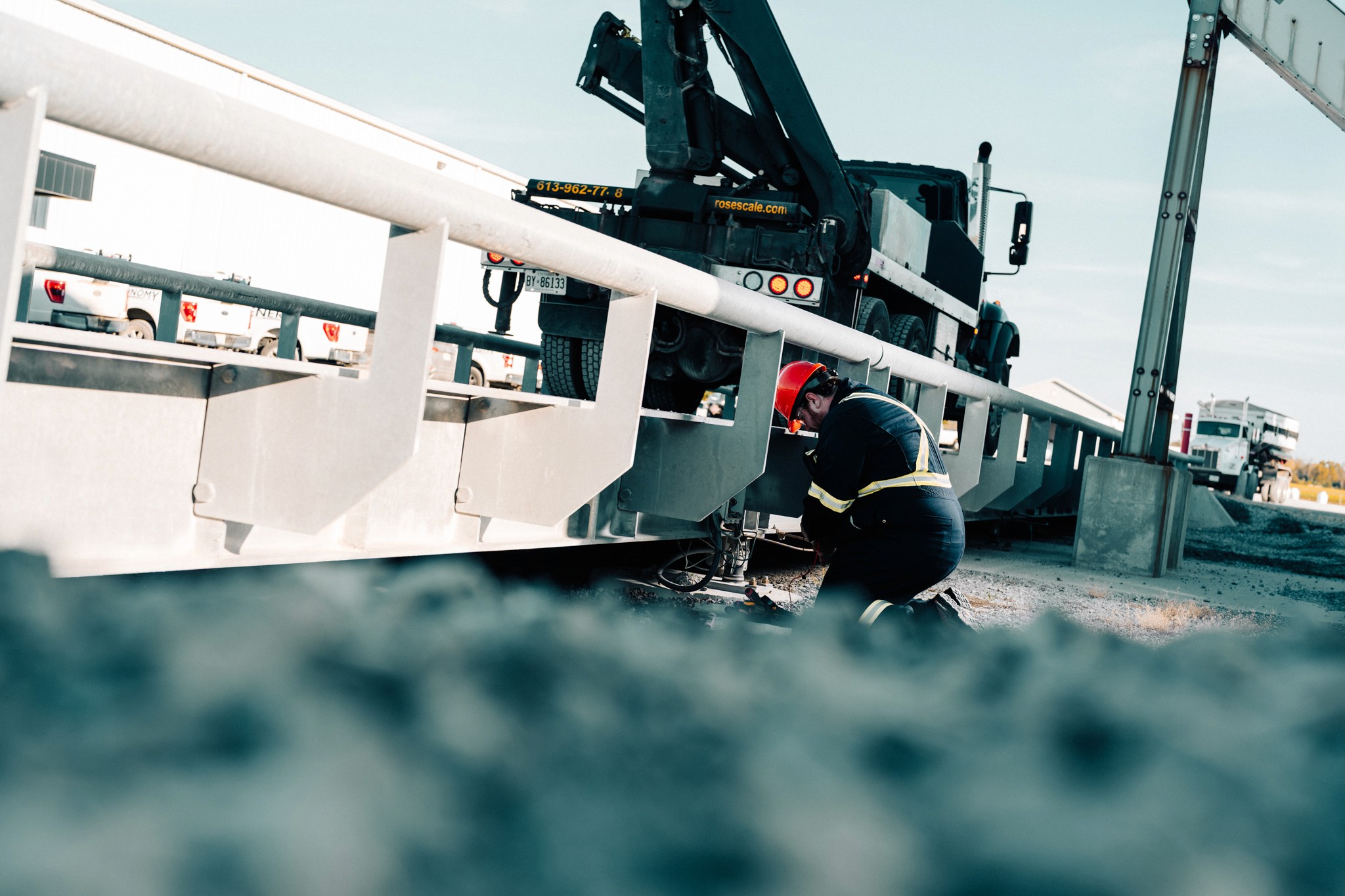
Need a Repair or Calibration?
A down scale doesn’t have to mean a down operation. Our technicians can get you back to accurate weighing fast.