
Small measurement errors can quietly erode margins, disrupt production, and create customer disputes. This article explains how inaccurate scales impact revenue, quality control, and operational efficiency across industrial environments, and why regular calibration and verification matter.
In industrial operations, small errors add up quickly.
A scale that is off by a fraction of a percent may not seem like a major issue. But when you are weighing thousands of loads per week, whether aggregate, waste, raw materials, or finished goods, even minor inaccuracies can quietly erode margins, disrupt production, and damage customer confidence.
Most scale problems do not begin as major failures. They start as small inconsistencies that go unnoticed until the financial impact becomes visible.
Here is what that looks like in real operations.
Lost Revenue from Small Measurement Errors
In high-volume environments, scale accuracy directly affects revenue.
If you are selling by weight and your scale reads light, you are giving product away.
If it reads heavy, you risk customer disputes and reputational damage.
Consider operations such as:
Aggregate facilities weighing hundreds of truckloads per day
Waste and recycling sites billing by tonnage
Food production plants packaging goods for sale by declared weight
An error of even 0.5 percent across large volumes can represent significant losses over time.
During busy seasons, when throughput is high, discrepancies multiply quickly. During slower periods, when margins are tighter, even small losses become more noticeable.
Accuracy protects revenue in both situations.
Production Downtime and Operational Disruption
When a scale fails completely, the impact is immediate.
Truck scales that go down at a gravel pit or recycling facility can stop outbound loads. In manufacturing settings, inaccurate hopper or floor scales can interrupt batching and blending processes.
Even short interruptions can lead to:
Delayed shipments
Missed production targets
Overtime labor costs
Workflow bottlenecks
In many facilities, a scale is not just a measuring device. It is a control point in the production process. When it becomes unreliable, the rest of the operation feels the effect.
Customer Confidence and Disputes
Customers today pay close attention to accuracy.
If buyers believe they are being overcharged because of inconsistent weights, trust can erode quickly. Even the perception of inaccuracy can create tension.
In legal for trade environments, compliance is required. Regular verification and certification ensure both parties can rely on the transaction.
A properly calibrated and certified scale protects:
Your business
Your customers
Your reputation
Confidence in measurement supports long term business relationships.
Quality Control and Product Integrity
In manufacturing and food production, weight accuracy directly affects product quality.
Many facilities rely on precise ingredient ratios in batching and blending processes. If a scale is inaccurate, the final product may fall outside specification.
This can result in:
Product waste
Rework
Inconsistent output
Compliance concerns
A small deviation in weight can change formulation results. Maintaining accuracy ensures consistency from batch to batch.
The Cumulative Effect of Small Problems
Scale issues rarely begin with obvious failure.
They often start with:
Moisture or debris buildup
Load cell fatigue
Structural wear
Electrical disturbances
Gradual calibration drift
Without regular inspection and verification, these minor issues compound over time.
By the time the problem becomes obvious, the cost has already been absorbed in lost revenue, downtime, or quality setbacks.
Accuracy Protects More Than Compliance
For industrial businesses, accurate weighing systems support:
Revenue protection
Production efficiency
Regulatory compliance
Customer trust
Quality consistency
Routine calibration, preventative maintenance, and proper certification are not simply regulatory requirements. They are safeguards for your operation.
The cost of maintaining accuracy is predictable.
The cost of inaccuracy rarely is.
Final Thoughts
Inaccurate scales do not always announce themselves. Their impact shows up gradually in margins, disputes, downtime, and wasted product.
Whether you operate in aggregates, waste, manufacturing, retail, or food production, your weighing systems are part of your foundation.
Ensuring they remain accurate, compliant, and dependable protects more than numbers on a display. It protects your business.

Need New Equipment?
From a single bench scale to a full truck scale installation, we’ll help you get the right system in place from the start.
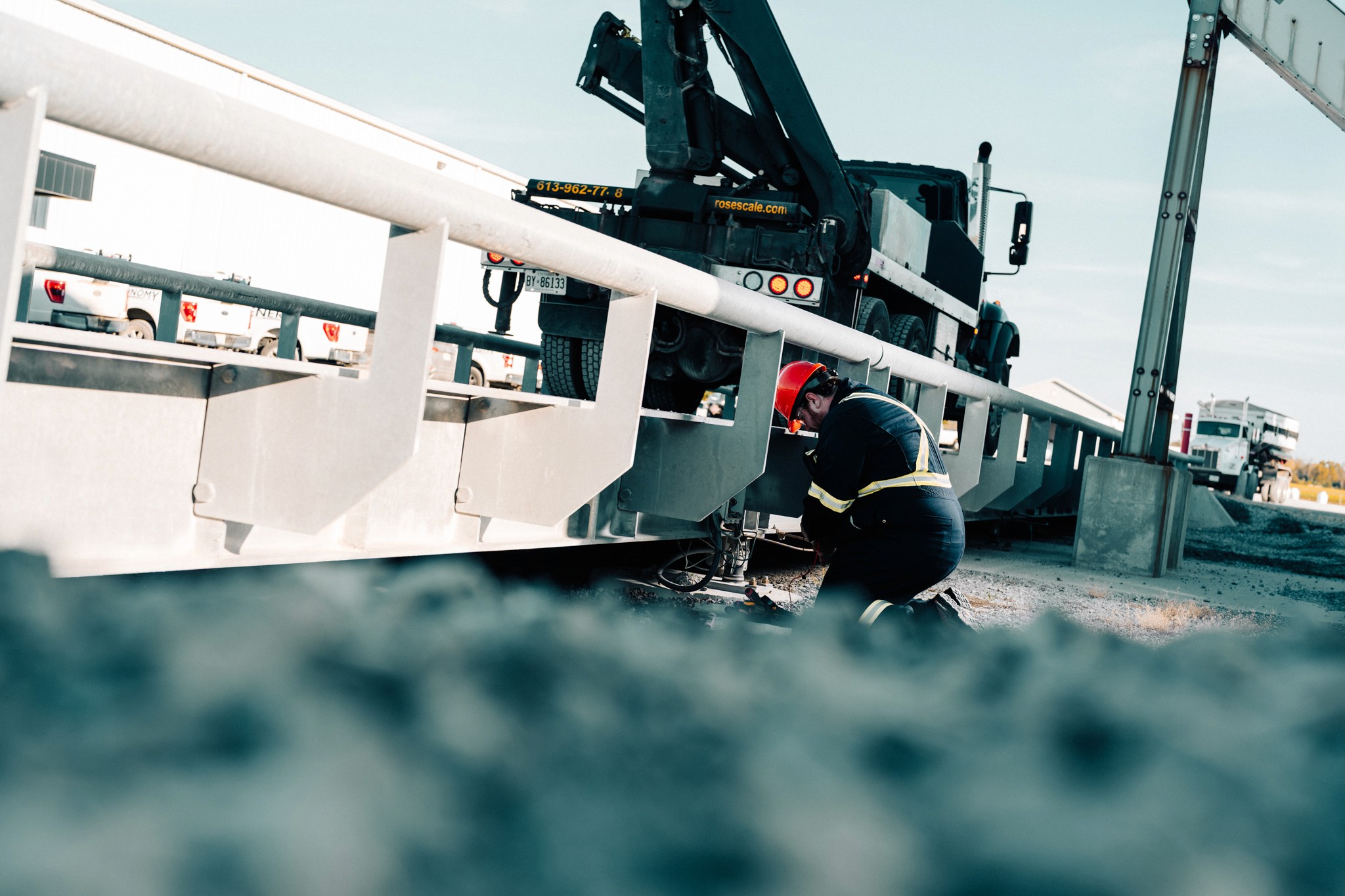
Need a Repair or Calibration?
A down scale doesn’t have to mean a down operation. Our technicians can get you back to accurate weighing fast.