
Managing multiple vendors for different scale needs can create delays and communication gaps. This article explains the value of working with a one-stop weighing partner that handles lab scales, truck scales, welding, cleaning, integration, and certification under one roof.
Industrial operations rely on more than one type of scale.
A single facility may use laboratory balances for formulation, floor scales for shipping, hopper systems for batching, and truck scales for inbound and outbound loads. Each system plays a role in accuracy, compliance, and revenue.
When these systems are serviced by different providers, coordination becomes complex.
A one-stop weighing partner simplifies that complexity.
Consistency Across Scale Types
Different scale types require different expertise.
Laboratory balances demand precision and careful handling. Truck scales require heavy equipment, structural knowledge, and legal for trade certification. Hopper and conveyor systems involve integration with automation controls.
When one provider supports all of these systems, service standards remain consistent.
Technicians understand how each scale fits into the broader operation rather than treating them as isolated devices.
Integrated Structural and Electronic Support
Large-scale systems are both mechanical and electronic.
A provider that offers:
Welding and structural repair
Load cell replacement
Electrical diagnostics
Software integration
Drainage and cleaning services
can address issues comprehensively.
Instead of calling one company for structural repair and another for calibration, a single partner manages the full scope.
This reduces scheduling delays and miscommunication.
Simplified Compliance Management
Legal for trade systems require certification and documentation.
When a single provider handles:
Calibration
Verification
Certification
Record keeping
compliance tracking becomes more straightforward.
There is no uncertainty about who performed which service or whether documentation meets regulatory standards.
Faster Response and Coordination
When multiple vendors are involved, scheduling can become fragmented.
A one-stop partner:
Understands your full equipment inventory
Coordinates service across departments
Reduces repeat site visits
Identifies issues that span multiple systems
This improves response efficiency and reduces downtime.
Long-Term Planning and Lifecycle Support
Scale systems evolve over time.
Facilities expand. Equipment ages. Integration needs increase.
A comprehensive service partner can:
Recommend upgrades
Plan modernization
Align preventative maintenance schedules
Support long-term budgeting
Because the provider understands the entire system landscape, planning becomes more strategic.
Reduced Administrative Burden
Managing multiple service providers requires:
Separate contracts
Multiple invoices
Distinct scheduling coordination
Repeated onboarding
Consolidating service under one provider reduces administrative workload.
Clear communication and centralized service records improve organization and accountability.
Improved Operational Visibility
A partner that services all scale systems gains deeper insight into your operation.
Patterns become visible, such as:
Recurring environmental challenges
Load distribution issues
Integration inconsistencies
Structural stress trends
This broader perspective supports proactive problem solving rather than isolated repairs.
Final Thoughts
Industrial weighing systems are interconnected.
When lab balances, truck scales, structural components, integration systems, and certification requirements are managed separately, complexity increases.
A one-stop weighing partner brings consistency, efficiency, and strategic oversight to the entire system.
In operations where accuracy supports revenue and compliance, comprehensive support under one roof strengthens reliability and long-term performance.

Need New Equipment?
From a single bench scale to a full truck scale installation, we’ll help you get the right system in place from the start.
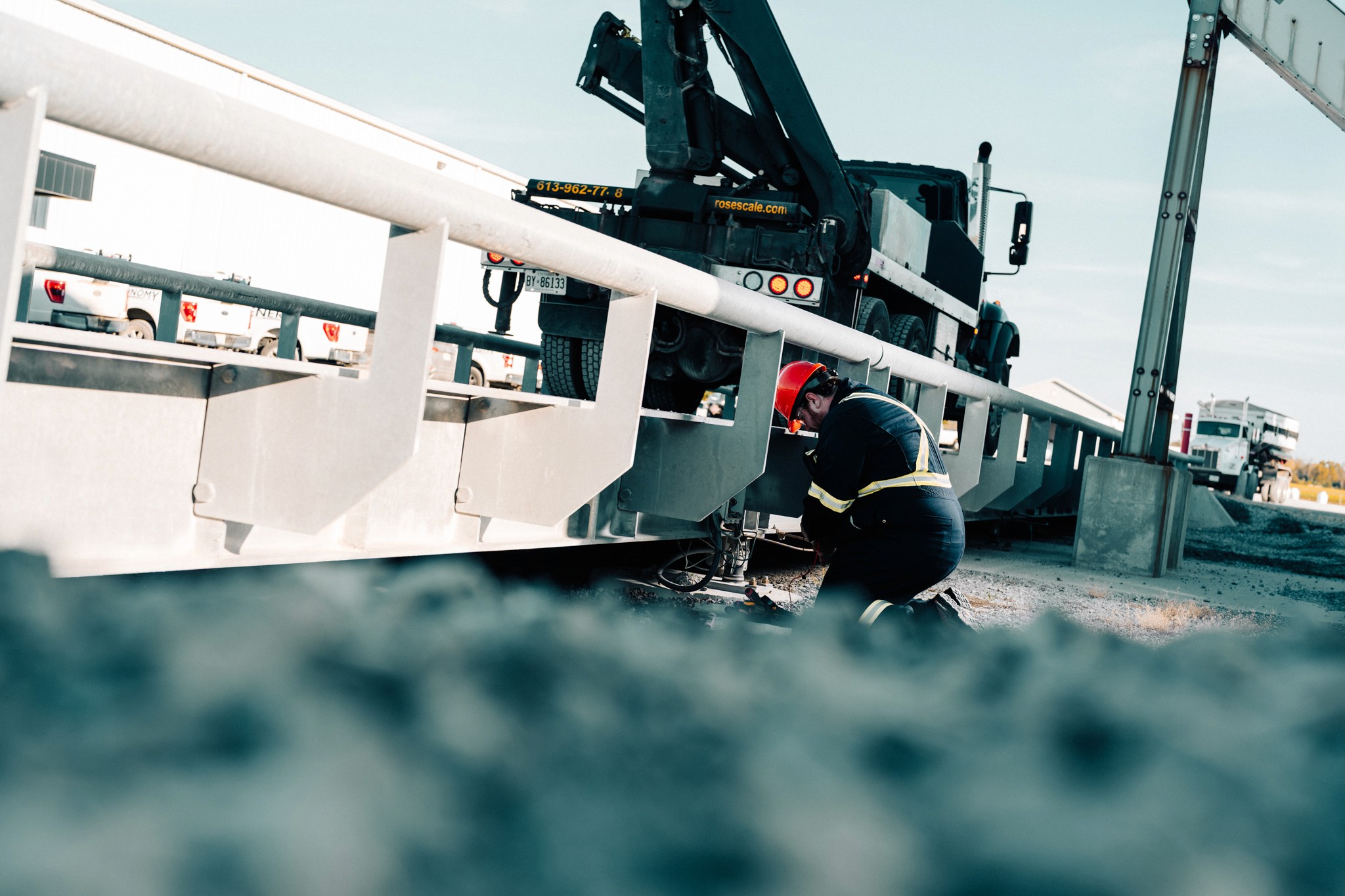
Need a Repair or Calibration?
A down scale doesn’t have to mean a down operation. Our technicians can get you back to accurate weighing fast.