
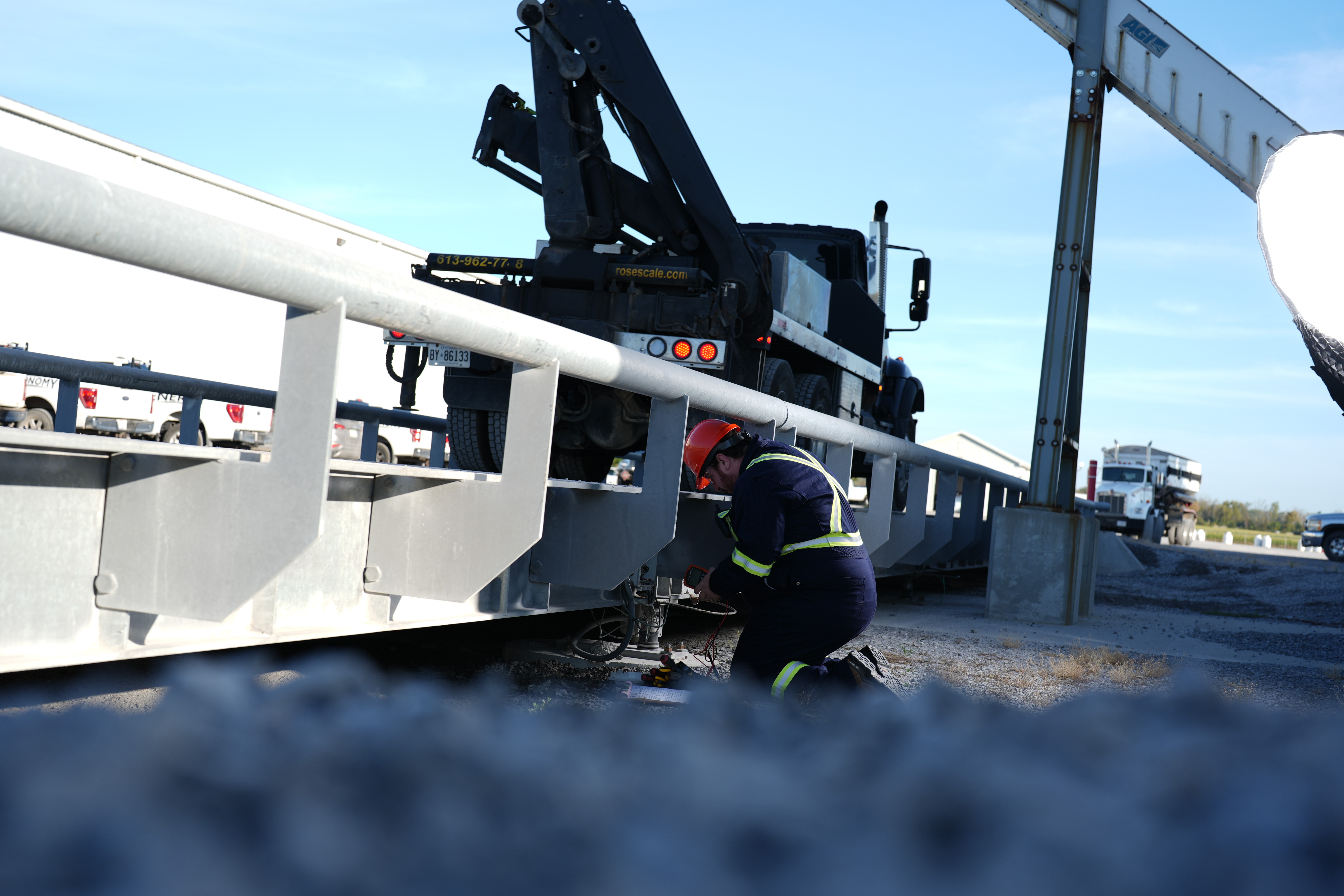
Moisture and debris are among the most common causes of truck scale inaccuracy. This article explains how water, mud, ice, and buildup interfere with load cells and structural movement, and how routine maintenance protects long-term performance.
Truck scales operate in demanding outdoor environments.
Unlike indoor production scales, truck scales are exposed to rain, snow, mud, road salt, gravel, and constant heavy traffic. Over time, moisture and debris can interfere with both mechanical and electronic components.
When not addressed, these environmental factors affect accuracy, reliability, and compliance.
How Water Affects Scale Performance
Water is one of the most persistent threats to truck scales.
Improper drainage can allow water to collect:
Around load cells
Inside scale pits
Along cable runs
Near junction boxes
When water accumulates, it can:
Cause corrosion
Interfere with proper load cell movement
Introduce electrical signal instability
Freeze during cold weather and restrict scale travel
Standing water in pit-style scales is especially problematic. Over time, repeated exposure increases the likelihood of failure.
The Impact of Mud and Gravel Buildup
Debris accumulation often goes unnoticed until performance is affected.
Mud, gravel, and compacted material can lodge:
Between the weighbridge and foundation
Around suspension components
Beneath deck edges
Truck scales are designed to move slightly under load. When debris restricts that movement, the scale may not settle evenly.
This can result in:
Inconsistent readings
Corner imbalance
Increased stress on load cells
Routine cleaning prevents mechanical interference.
Ice and Freeze-Thaw Cycles
In regions with harsh winters, ice creates additional challenges.
Moisture trapped in small gaps can freeze and expand. This may:
Lock mechanical components in place
Create pressure against structural elements
Restrict load cell movement
Cause temporary inaccuracy
Repeated freeze-thaw cycles accelerate wear and structural fatigue.
Preparing for winter with proper drainage and debris removal reduces seasonal risk.
Corrosion and Long-Term Structural Damage
Moisture combined with road salt accelerates corrosion.
Over time, corrosion can weaken:
Steel beams
Weld seams
Mounting brackets
Load cell assemblies
Structural deterioration affects weight distribution and alignment.
Early identification and repair prevent minor corrosion from becoming major structural failure.
Electrical Vulnerability
Load cells and wiring systems depend on stable electrical signals.
Moisture intrusion through damaged cable jackets or unsealed junction boxes can lead to:
Signal fluctuation
Intermittent error codes
Long-term sensor damage
Proper sealing and routine inspection protect sensitive components from environmental exposure.
Preventative Maintenance That Makes a Difference
Environmental damage is often preventable with routine attention.
Recommended practices include:
Clearing debris from around the scale deck
Inspecting drainage systems
Pumping out pit water when necessary
Checking cable integrity
Removing compacted material from gaps and edges
Conducting regular calibration and inspection
Preventative maintenance reduces the likelihood of unexpected downtime and protects accuracy.
Why Small Issues Should Not Be Ignored
Moisture and debris problems rarely cause immediate shutdown.
Instead, they introduce gradual inaccuracy and increased component stress. Over time, this may lead to:
Repeated calibration drift
Premature load cell failure
Structural repair needs
Compliance risk
Addressing environmental buildup early protects both performance and lifespan.
Final Thoughts
Truck scales are designed to handle heavy loads, but they remain vulnerable to environmental exposure.
Water, mud, ice, and debris affect mechanical movement, electrical stability, and structural integrity. Routine cleaning, drainage maintenance, and inspection prevent small issues from becoming costly failures.
Protecting your scale from environmental stress is not simply about cleanliness. It is about maintaining accuracy, compliance, and long-term reliability.

Need New Equipment?
From a single bench scale to a full truck scale installation, we’ll help you get the right system in place from the start.
Need a Repair or Calibration?
A down scale doesn’t have to mean a down operation. Our technicians can get you back to accurate weighing fast.