
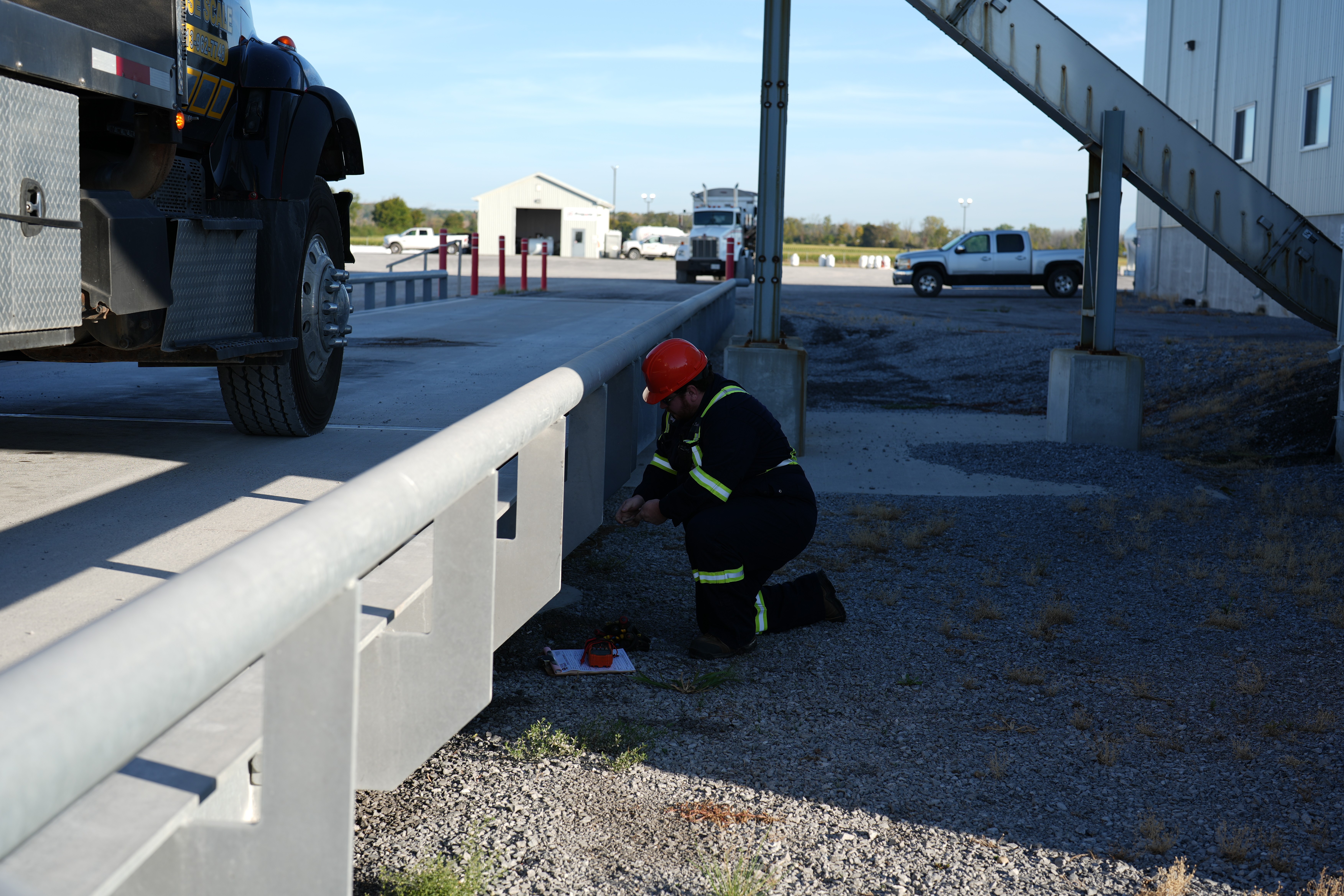
Installing a new truck scale involves more than placing equipment on site. This article walks through what to expect during planning and installation, from site preparation and foundation work to crane coordination, electrical setup, calibration, and inspection.
A new truck scale is a significant investment.
Whether you operate an aggregate pit, waste facility, agricultural site, or industrial yard, installing a truck scale requires careful planning. The process involves coordination between contractors, technicians, and regulatory authorities.
Understanding each stage helps ensure a smooth installation and long-term reliability.
Step 1: Site Evaluation and Planning
Every installation begins with a site assessment.
Key considerations include:
Traffic flow and truck access
Soil conditions and load-bearing capacity
Drainage patterns
Space for approaches and exits
Utility access
Proper planning ensures that trucks can safely and efficiently enter, position, and exit the scale.
Site layout affects both operational efficiency and long-term structural stability.
Step 2: Foundation Preparation
The foundation is critical.
Truck scales rely on properly engineered concrete foundations to maintain alignment and structural integrity. Depending on the design, installations may involve:
Full-length concrete piers
Pit-style foundations
Surface-mounted slab construction
Concrete must cure fully before scale components are installed. Improper curing or inadequate reinforcement can lead to settling and long-term calibration challenges.
Foundation accuracy directly affects scale performance.
Step 3: Weighbridge Delivery and Crane Coordination
Truck scale weighbridges are heavy and require careful placement.
Installation typically involves:
Coordinating crane or lifting equipment
Positioning deck sections accurately
Securing mounting assemblies
Ensuring proper alignment with foundations
Precision during this phase prevents stress on load cells and structural components.
Coordination between contractors and scale technicians ensures safe and accurate placement.
Step 4: Load Cell Installation and Mechanical Setup
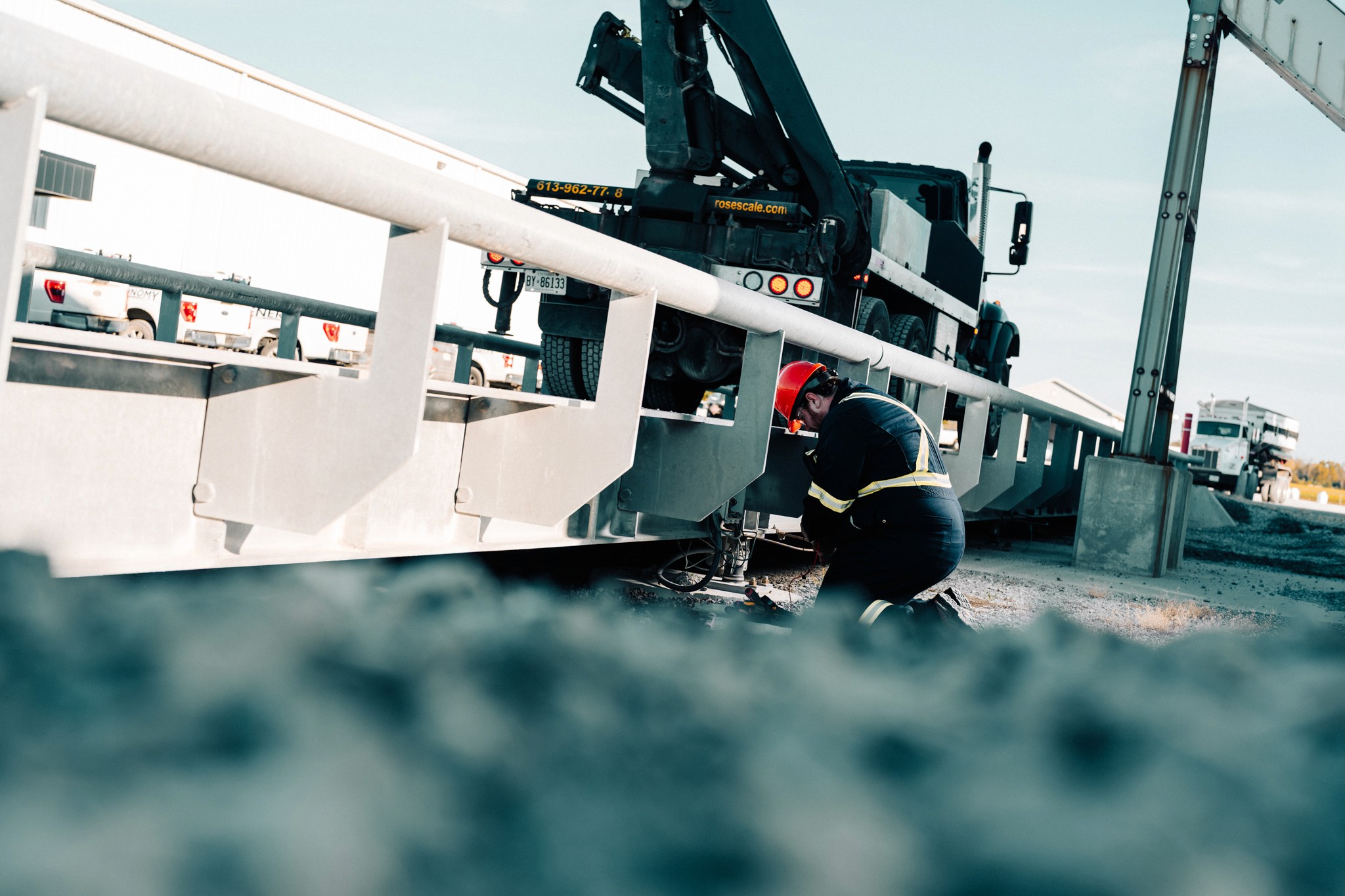
Load cells are installed and connected to the weighbridge structure.
Technicians will:
Position load cells according to manufacturer specifications
Secure mounting hardware
Route cables safely
Verify mechanical alignment
Proper mechanical setup ensures that weight transfers evenly across the system.
Step 5: Electrical Integration
Modern truck scales require electrical integration.
This includes:
Installing indicator units
Routing communication cables
Establishing grounding systems
Integrating with software or ticketing systems
Electrical stability is essential for accurate signal transmission.
Careful wiring and environmental protection reduce the risk of moisture intrusion or signal interference.
Step 6: Initial Calibration
Once installation is complete, calibration begins.
Certified test weights or test trucks are used to verify:
Accuracy across the scale range
Corner balance
Repeatability
Linearity
Calibration ensures the scale measures correctly before entering service.
Adjustments are made as needed to bring the system within tolerance.
Step 7: Inspection and Certification
If the scale is used for legal for trade transactions, certification is required.
An authorized inspection verifies that the installation meets regulatory standards.
Upon successful verification:
Documentation is completed
Compliance marks are applied
The scale is approved for commercial use
This step is essential before using the scale for billing purposes.
Step 8: Operator Training and Ongoing Maintenance Planning
Once operational, staff should understand:
Proper weighing procedures
Basic troubleshooting
Cleaning and debris removal
When to call for service
Planning ongoing preventative maintenance from the beginning protects the investment and reduces long-term risk.
Final Thoughts
Installing a new truck scale involves coordination, engineering, and careful execution.
From site preparation and foundation work to crane placement, electrical integration, calibration, and certification, each step plays a role in long-term performance.
With proper planning and professional installation, a truck scale becomes a reliable revenue and compliance asset for years to come.

Need New Equipment?
From a single bench scale to a full truck scale installation, we’ll help you get the right system in place from the start.
Need a Repair or Calibration?
A down scale doesn’t have to mean a down operation. Our technicians can get you back to accurate weighing fast.