
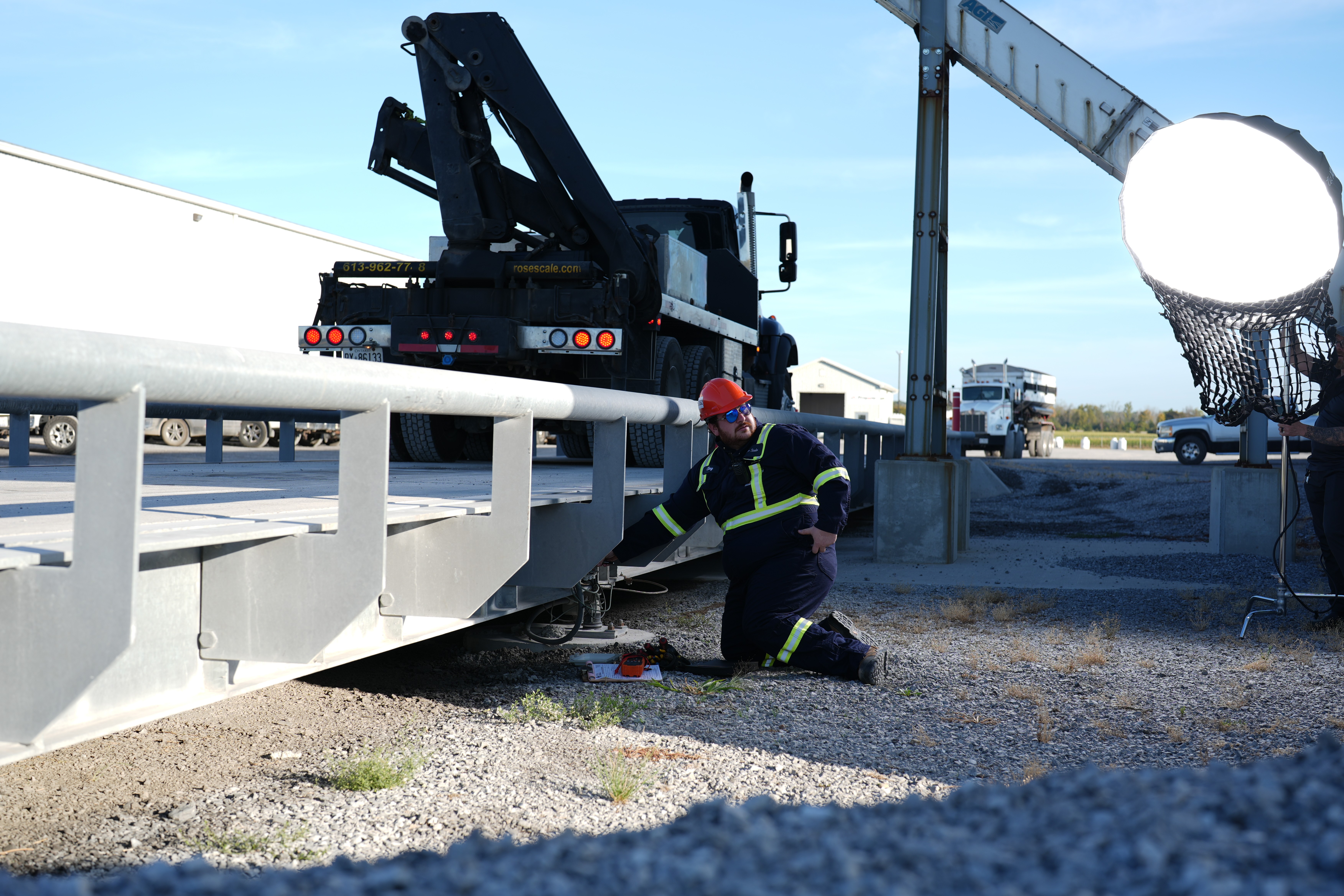
Load cell failure rarely happens without warning. This article outlines the early signs of load cell problems, including drift, unstable readings, physical damage, and environmental exposure, and explains why early detection protects accuracy and uptime.
Load cells are the core measuring component of most modern scale systems.
Whether installed in truck scales, floor scales, hopper systems, or batching equipment, load cells convert mechanical force into an electrical signal. When they begin to fail, accuracy is affected.
Complete failure is uncommon without prior warning. In most cases, load cell issues develop gradually.
Recognizing the early signs helps prevent downtime and revenue loss.
Gradual Calibration Drift
One of the earliest signs of load cell trouble is drift.
If a scale requires frequent recalibration or struggles to maintain accuracy over time, a load cell may be deteriorating.
Drift may appear as:
Slowly increasing deviation from known test weights
Repeated adjustments required to stay within tolerance
Difficulty maintaining zero
While minor drift can occur naturally, persistent or worsening deviation should be investigated.
Inconsistent or Unstable Readings
Load cell issues often produce unstable displays.
Symptoms may include:
Fluctuating weight readings with no change in load
Difficulty settling to a stable value
Intermittent spikes or drops
Readings that vary between repeated weighments
Unstable signals can result from internal damage, moisture intrusion, or wiring issues connected to the load cell.
Stability is a key indicator of load cell health.
Corner or Section Imbalance
In multi-load cell systems such as truck scales or large platforms, imbalance between corners may signal a failing component.
During testing, one corner may read consistently higher or lower than others.
This may indicate:
A damaged load cell
Uneven structural support
Misalignment caused by environmental factors
Corner testing is an effective way to isolate potential issues.
Physical Damage
Load cells are designed to withstand significant force, but they are not immune to physical stress.
Damage may result from:
Overloading beyond rated capacity
Impact loading from heavy equipment
Structural shifting
Corrosion
Visible signs can include cracked housings, bent components, or corrosion buildup.
Even if performance seems stable, visible damage warrants inspection.
Moisture and Environmental Exposure
Outdoor and industrial environments expose load cells to moisture, road salt, dust, and temperature fluctuations.
Water intrusion is one of the most common causes of failure.
Symptoms may include:
Erratic readings during wet conditions
Increased instability after freeze-thaw cycles
Corrosion around cable entry points
Proper sealing and drainage reduce environmental risk, but aging components become more vulnerable over time.
Electrical Issues and Signal Errors
Load cells depend on stable electrical signals.
If wiring is compromised or internal strain gauges deteriorate, signal irregularities may occur.
Indicators may display:
Error codes
Signal loss
Inconsistent output during testing
Electrical disturbances such as lightning strikes can also damage load cells.
Any sudden change in behavior following an electrical event should prompt evaluation.
Increased Frequency of Service Calls
If your scale requires repeated troubleshooting without a clear structural or electronic cause, load cells may be nearing the end of their service life.
Aging components may not fail outright but may become less reliable over time.
Monitoring service history helps identify patterns.
When to Replace vs Repair
In some cases, issues can be corrected through recalibration or minor adjustments.
However, if testing confirms that a load cell is out of tolerance or internally damaged, replacement is often the most reliable solution.
Replacing a failing load cell proactively is typically less disruptive than waiting for full system failure.
Final Thoughts
Load cells are critical to accurate measurement.
Drift, unstable readings, physical damage, moisture exposure, and electrical irregularities are all warning signs that should not be ignored.
Early detection and preventative maintenance reduce downtime, protect revenue, and maintain compliance.
When load cell performance begins to decline, timely evaluation helps ensure that small issues do not become larger operational problems.

Need New Equipment?
From a single bench scale to a full truck scale installation, we’ll help you get the right system in place from the start.
Need a Repair or Calibration?
A down scale doesn’t have to mean a down operation. Our technicians can get you back to accurate weighing fast.