
Not all scale service providers offer the same level of capability. This article outlines what plant managers and business owners should look for when choosing a provider, including accreditation, equipment capacity, response time, technical expertise, and transparent billing practices.
When a scale needs service, the immediate priority is getting it working again.
But choosing the right service provider should not be a reactive decision. The company you rely on for calibration, inspection, repair, and certification directly affects your uptime, compliance, and long-term operating costs.
Here is a practical checklist to consider when evaluating a scale service partner.
Accreditation and Compliance Authority
If your scale is used in commercial transactions, legal for trade compliance is essential.
Confirm that the provider is authorized to perform required inspections and certifications. Accreditation ensures that:
Technicians follow approved procedures
Test equipment meets traceable standards
Verification results are documented properly
Certifications are recognized by regulators
Without proper authority, you may still need another provider to complete required verification.
Equipment Capacity and Capability
Not all providers are equipped to service all scale types.
Ask whether the company has the capacity to handle:
Full-length truck scales
Heavy-duty industrial platforms
Hopper and batching systems
Conveyor scales
Laboratory and precision balances
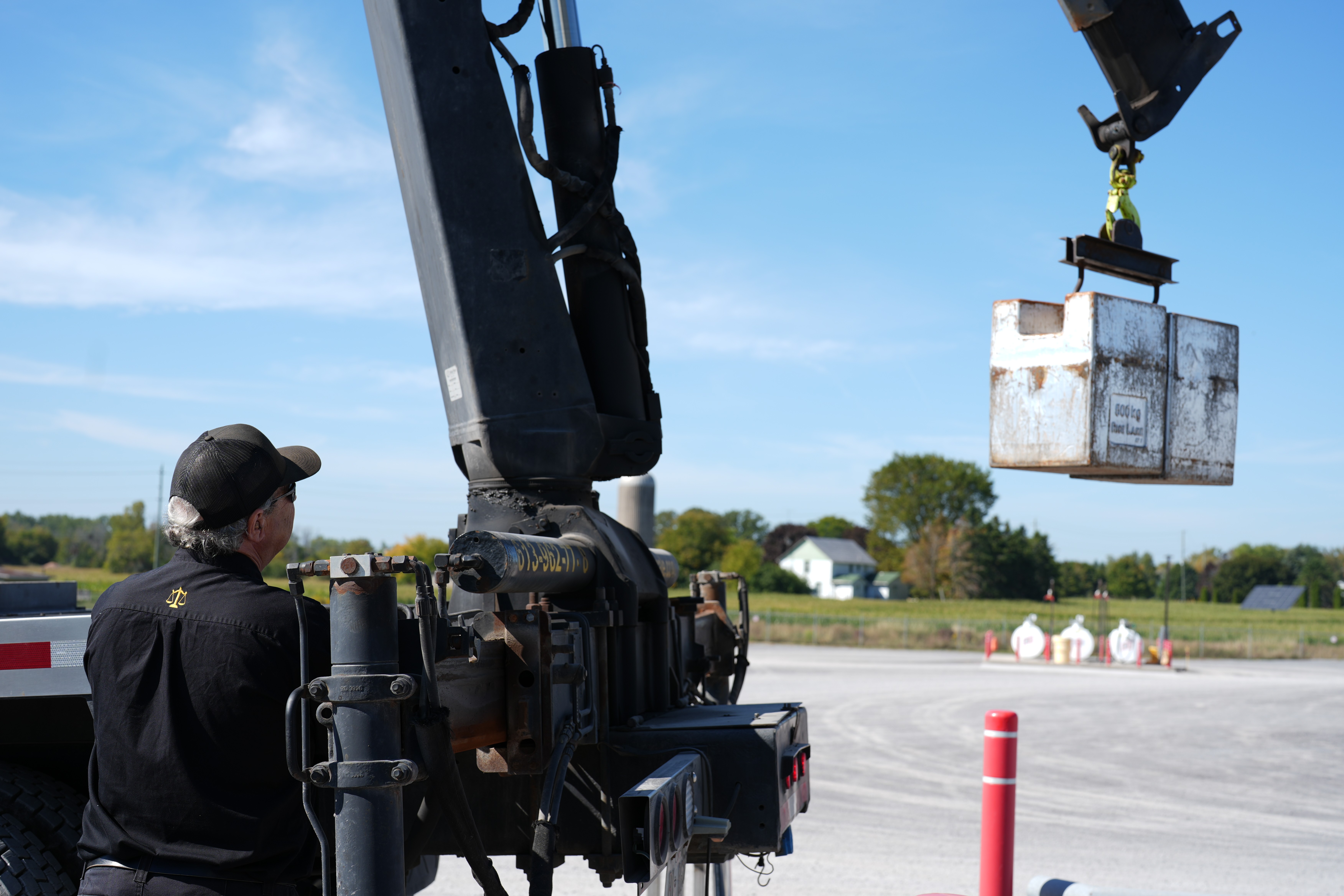
Servicing large truck scales requires certified test weights, specialized lifting equipment, and trained personnel. If a provider lacks the proper equipment, service may be delayed or subcontracted.
Proper equipment ensures the job can be completed efficiently and correctly.
Spare Parts Availability
Downtime often extends when replacement parts are not readily available.
A capable provider should maintain access to:
Load cells
Indicators and electronics
Junction boxes
Cables and connectors
Structural components when applicable
Ask how quickly critical parts can be sourced. In remote or high-volume environments, spare parts planning can significantly reduce operational disruption.
Response Time and Geographic Coverage
Location matters.
In regions with large service territories, travel time directly affects response speed. When evaluating a provider, consider:
Average response time for emergency calls
Distance from your facility
Scheduling flexibility
Availability during peak seasons
For businesses that rely on truck scales or production scales for revenue, faster response times reduce financial impact.
Technical Expertise and Experience
Scale systems combine mechanical, electrical, and electronic components.
A qualified service provider should demonstrate:
Experience across multiple industries
Familiarity with different manufacturers and models
Ability to diagnose both structural and electronic issues
Understanding of environmental challenges
Experience often determines how quickly problems are identified and resolved.
Preventative Maintenance Programs
Reactive repair is more expensive than preventative maintenance.
Ask whether the provider offers structured service programs that include:
Regular calibration
Inspection of load cells and wiring
Structural assessment
Documentation for compliance
Preventative programs reduce unexpected failures and extend equipment lifespan.
Transparent Billing Practices
Clear communication builds trust.
A reliable provider should offer:
Detailed explanations of work performed
Transparent pricing
Clear documentation
Honest assessment of repair versus replacement
Unexpected charges or unclear invoices can damage long-term relationships.
Service should be predictable, both operationally and financially.
Long-Term Partnership Mindset
The best service relationships are built over time.
When a provider understands your facility, equipment history, and operational schedule, service becomes more efficient. Instead of reacting to breakdowns, you can move toward planned maintenance and risk reduction.
Consistency improves reliability.
Final Thoughts
Choosing a scale service provider is not simply about who can respond first. It is about selecting a partner who can support your operation reliably, compliantly, and transparently.
Accreditation, equipment capacity, spare parts access, response time, technical expertise, and billing clarity all matter.
The right provider helps protect uptime, compliance, and revenue. In operations where accurate measurement is central, that choice has long-term impact.

Need New Equipment?
From a single bench scale to a full truck scale installation, we’ll help you get the right system in place from the start.

Need a Repair or Calibration?
A down scale doesn’t have to mean a down operation. Our technicians can get you back to accurate weighing fast.