
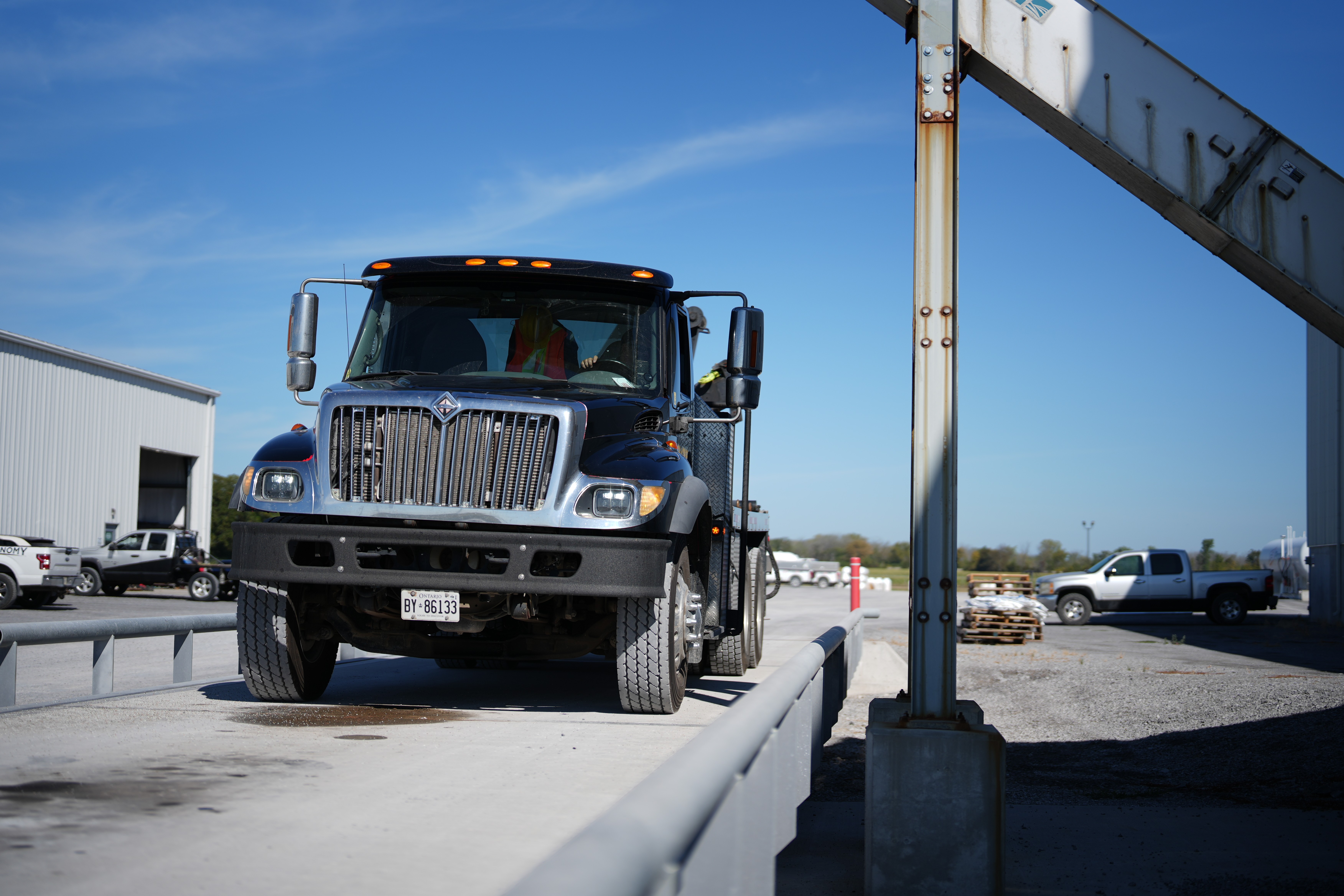
In a region as spread out as Eastern Ontario, scale service is not just about expertise. It is about logistics. This article explains why working with a properly equipped regional service partner improves response time, reliability, and long-term operational stability.
Eastern Ontario is not a compact service territory.
From Belleville to Ottawa, Cornwall, Kingston, and the surrounding rural and industrial areas, businesses operate across large distances. Gravel pits, waste facilities, feed mills, manufacturing plants, and agricultural operations are often located outside dense urban centers.
Servicing weighing systems in this region requires more than technical knowledge. It requires logistical capability.
Geography Changes Everything
In large metropolitan areas, multiple providers may be located within minutes of a site.
In Eastern Ontario, travel times are different.
Two-hour drives are common. Some facilities are located in remote areas with limited nearby service coverage. Weather conditions can further complicate travel, particularly in winter.
When a truck scale or production scale fails, distance directly affects downtime.
A regional service partner understands these realities and builds their operations around them.
Equipment and Capacity Matter
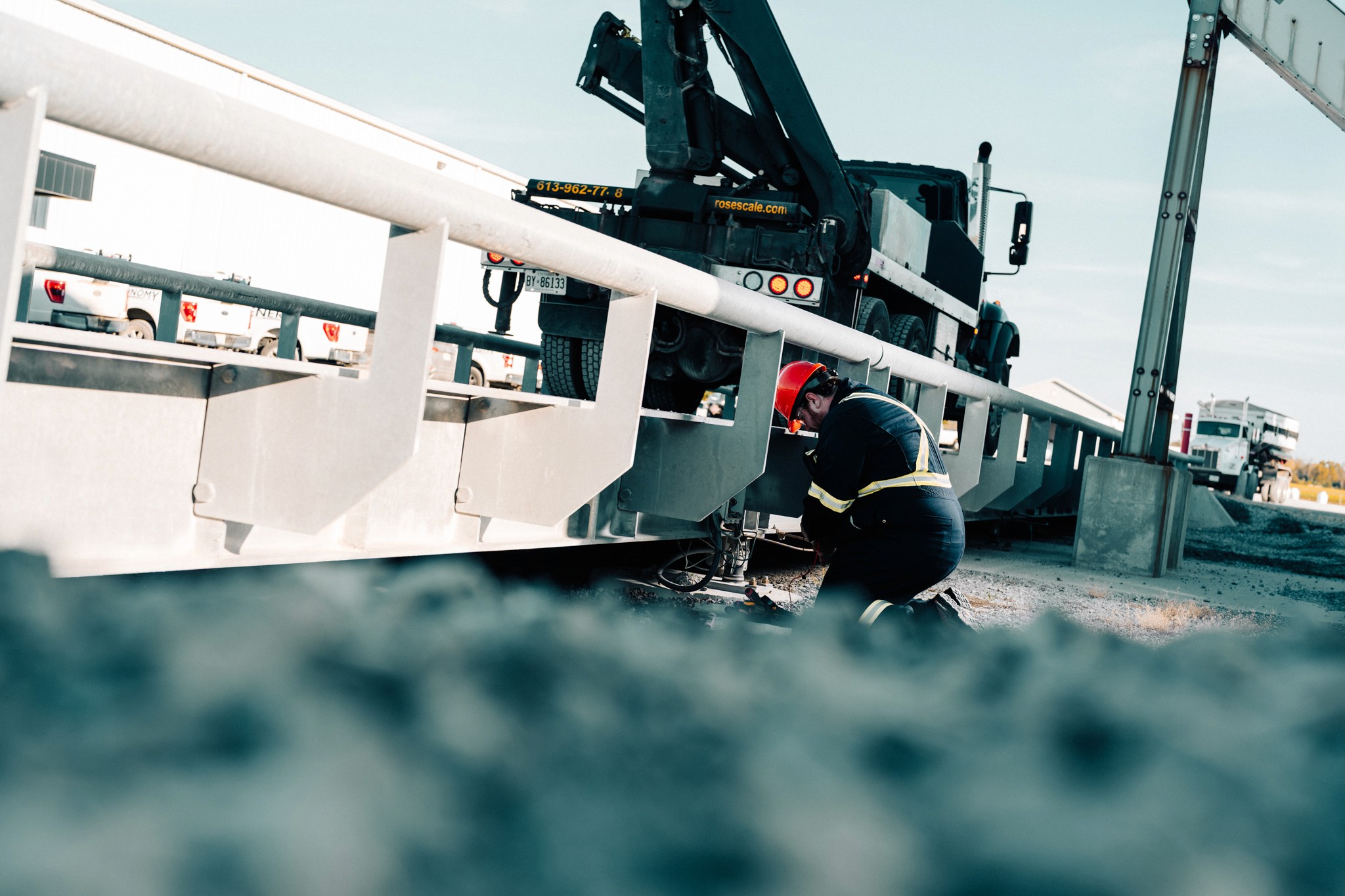
Servicing large industrial scales requires specialized equipment.
For example:
Certified test weights
Heavy-duty test trucks
Cranes or lifting equipment
Diagnostic tools
Spare parts inventory
Not every provider is equipped to handle full truck scale verification or structural repair in the field.
A properly equipped regional company invests in the tools required to service the types of scales common in the area, including large truck scales and industrial platforms.
That investment reduces delays and eliminates the need to subcontract critical work.
Faster Response Reduces Downtime
When a scale goes down, time matters.
Working with a provider located within the region improves response time and scheduling flexibility. Travel can be planned more efficiently. Emergency calls can be addressed without excessive delay.
In high-volume operations such as aggregates and waste, even a single day of downtime can have financial consequences.
Regional coverage increases the likelihood that service can be delivered quickly and consistently.
Understanding Local Industries
Eastern Ontario has a distinct mix of industries.
Aggregate operations, waste management, agriculture, food production, and manufacturing each have different scale requirements and seasonal cycles.
A regional partner becomes familiar with:
Local regulatory expectations
Seasonal workload fluctuations
Environmental conditions
Common installation types
This familiarity improves efficiency and problem-solving in the field.
Long-Term Partnership vs Occasional Service
When a provider regularly services facilities within the same geographic area, relationships develop.
Technicians become familiar with individual installations. Service history is understood. Preventative maintenance schedules are easier to manage.
Instead of reacting to breakdowns, businesses can move toward planned service programs that reduce risk over time.
Consistency improves reliability.
The Cost of Relying on Distant Providers
Working with providers located far outside the region may result in:
Extended travel charges
Longer wait times
Reduced scheduling flexibility
Limited availability for emergency response
While distance may not matter during routine service, it becomes critical when unexpected failures occur.
Regional presence reduces these risks.
Final Thoughts
In Eastern Ontario, geography is a factor in every service decision.
Choosing a properly equipped regional scale service partner improves response time, reliability, and operational stability. It ensures that when weighing systems require attention, support is available without unnecessary delay.
For businesses that rely on accurate measurement to generate revenue, proximity and preparedness matter.

Need New Equipment?
From a single bench scale to a full truck scale installation, we’ll help you get the right system in place from the start.
Need a Repair or Calibration?
A down scale doesn’t have to mean a down operation. Our technicians can get you back to accurate weighing fast.